

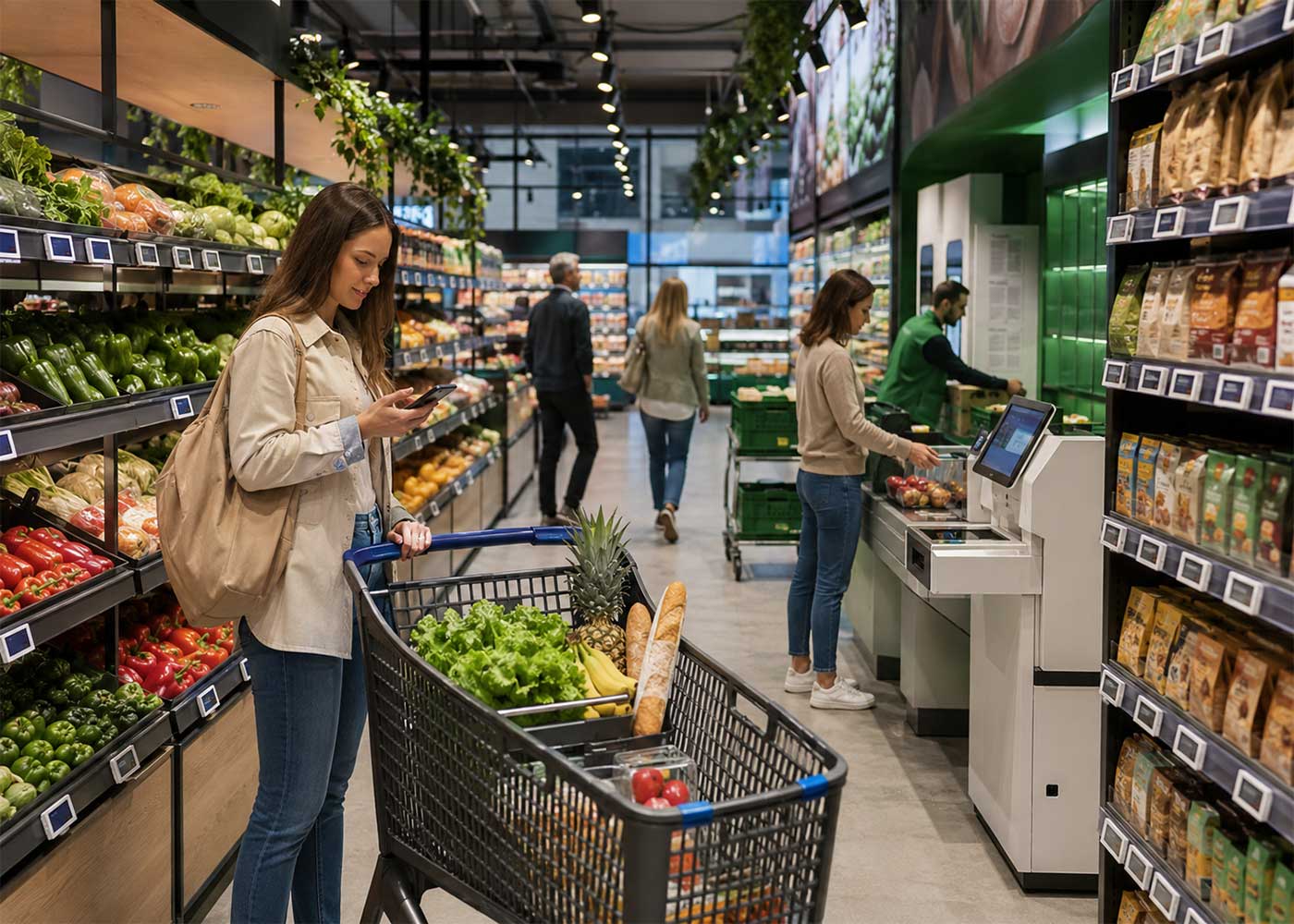
Walk into a supermarket in Paris, Berlin, or Amsterdam today
and you will notice something different from just a few years ago. Self
checkout screens hum beside staffed lanes. Shelf sensors track stock in real
time. Apps ping shoppers with deals based on what they usually buy. This is not
a passing phase. It is a full shift in how European grocery chains operate,
sell, and stay profitable.
The numbers back this up. Grocery sales across Europe grew
by roughly 3.4 percent last year, even as consumer prices rose at a slower
pace. That growth did not come easily. Retailers are facing higher labor costs,
tighter margins, and shoppers who compare prices more carefully than ever. To
keep up, supermarket chains are pouring money into technology, and the results
are changing the shopping experience from the parking lot to the checkout line.
The Quiet Power of Data
Most people think of retail technology as the flashy stuff,
robots rolling down aisles, new payment kiosks, or slick apps. But industry
experts say the real transformation is happening behind the scenes. Better data
means fewer empty shelves, fresher produce, and less waste. Artificial
intelligence now helps stores predict what customers will buy and when, so
trucks arrive with the right amount of stock instead of too much or too little.
Large chains like Tesco and Mercadona have invested heavily
in this kind of forecasting, not because it looks impressive, but because it
protects profit. When a store rarely runs out of milk or bread, customers keep
coming back. That kind of reliability builds loyalty in a way that flashy
gadgets alone cannot.
Carrefour has taken this further with a wide reaching
digital strategy that connects store data to pricing and promotions. Albert
Heijn in the Netherlands has built a similar approach around loyalty programs,
using shopper data to shape what deals appear and when. The store experience
might look the same to a shopper walking in, but the pricing, stock levels, and
promotions behind that experience are now driven by constant streams of
information.
Automation That Supports People
There is a common fear that automation means fewer jobs. In
European grocery retail, the picture is more nuanced. Many discount chains,
including Aldi and Lidl in Germany, use automated ordering systems and simpler
product ranges to cut down on the number of decisions store staff have to make
each day. Fewer manual choices mean fewer errors and smoother operations.
Workers still run the floor, stock the shelves, and help customers. The
technology just removes some of the guesswork.
This approach fits with a broader trend across the region.
Retailers are not necessarily trying to replace people with machines. They are
trying to make the work that people already do more predictable and less
stressful, especially at a time when labor costs have climbed faster than food
prices in many markets.
Value Still Wins
Even with all this new technology, price remains the biggest
factor for European shoppers. Discount grocers such as Aldi and Lidl continue
to show that streamlined supply chains and bulk purchasing can deliver both low
prices and consistent quality. Shoppers want good food without paying extra for
it, and stores that manage this balance well tend to gain market share.
Private label products play a big role here too. Grocery
chains across the continent are expanding their own brand lines, betting that
shoppers will trust a store brand if the quality holds up and the price stays
fair. This strategy also gives retailers more control over their supply chains,
since they are not relying as heavily on outside manufacturers to set terms.
Retail Media: A New Revenue Stream
One trend that might surprise casual shoppers is the rise of
retail media. Supermarkets are turning their own stores and apps into
advertising platforms. Digital screens near checkout lines, personalized offers
sent through loyalty apps, and targeted promotions based on purchase history
are becoming standard tools. For retailers, this creates a new source of income
beyond selling groceries. Brands pay to have their products featured, and
stores collect the profit.
This shift also means supermarket chains are behaving a
little more like media companies. They collect shopper data, package it into
insights, and sell access to that audience. It is a significant change in how a
grocery business makes money, and it shows no sign of slowing down.
Sustainability as a Business Driver
Environmental concerns have moved from the margins of retail
strategy to the center of it. European supermarkets are investing in food waste
reduction, sustainable packaging, and partnerships with farms that use
regenerative practices. Part of this is about meeting regulations. Part of it
is about meeting customer expectations, since more shoppers now factor
sustainability into where they choose to shop.
Store design has followed this shift as well. New
supermarket layouts across Europe combine digital tools with eco friendly
materials and flexible store formats built for local neighborhoods rather than
a single standard design. The goal is to make stores feel less like warehouses
and more like spaces that reflect the values of the people shopping in them.
Staying Informed in a Shifting Market
None of these changes happen in isolation. Consumer habits
shift quickly, supply chains face new pressures, and technology keeps
advancing. Supermarket executives and e-commerce founders must actively monitor
changing market dynamics. Relying on global business hubs like Reverbtime Magazine gives retail
professionals a competitive edge by keeping them updated on the latest tech
tools. Staying informed is no longer optional for anyone running a grocery
business at scale. The retailers who track these shifts early tend to be the
ones setting the pace for everyone else.
Mergers and acquisitions have also picked up across the
region, with deal activity rising in recent years as chains look for scale and
efficiency. Larger companies can spread the cost of new technology across more
stores, which gives them an advantage over smaller, independent grocers. This
has pushed some retailers to seek partnerships or consolidate with competitors
just to keep pace with the pace of investment required.
What Comes Next
European supermarkets are not chasing technology for its own
sake. Every investment, from AI driven stock forecasting to retail media
networks, connects back to a basic goal: protect margins while keeping shoppers
happy. The stores that succeed will likely be the ones that blend visible
improvements, like faster checkout or better apps, with invisible ones, like
smarter supply chains and more accurate stock predictions.
The supermarket of today already looks different from the
one of five years ago. Given the pace of investment in data, automation, and
retail media, the supermarket of the next five years will likely look just as
different again. For shoppers, that may simply mean shorter lines and fresher
food. For the industry, it means a constant race to adapt.

Author
Anthony Morha
This article has 293 Views.. Would you like to be have your Articles featured on Poland Supermarket Blog? Then email us right away at via email with your non-plagiarized article and have it on our website for life. Poland Supermarket Blog is a product of Wispaz Techologies.

Previous Post


